Cetaphil vs CeraVe – Introduction:
Choosing the right Cleanser is the first step toward a healthy glow. Both Cetaphil and CeraVe are legendary in the skincare world, but they serve different needs. Cleansing is the process of using a specialized formula.
It removes makeup, dead skin cells, oil and environmental pollutants from the surface of your skin. A proper cleanse prepares your skin to absorb active ingredients from serums and moisturizers much more effectively.
Unlike harsh soaps, modern cleansers are designed to purify your skin without stripping away the natural oils that keep it soft. Experts recommend cleansing twice a day. Once in the morning to refresh and once at night to remove the day’s grime.
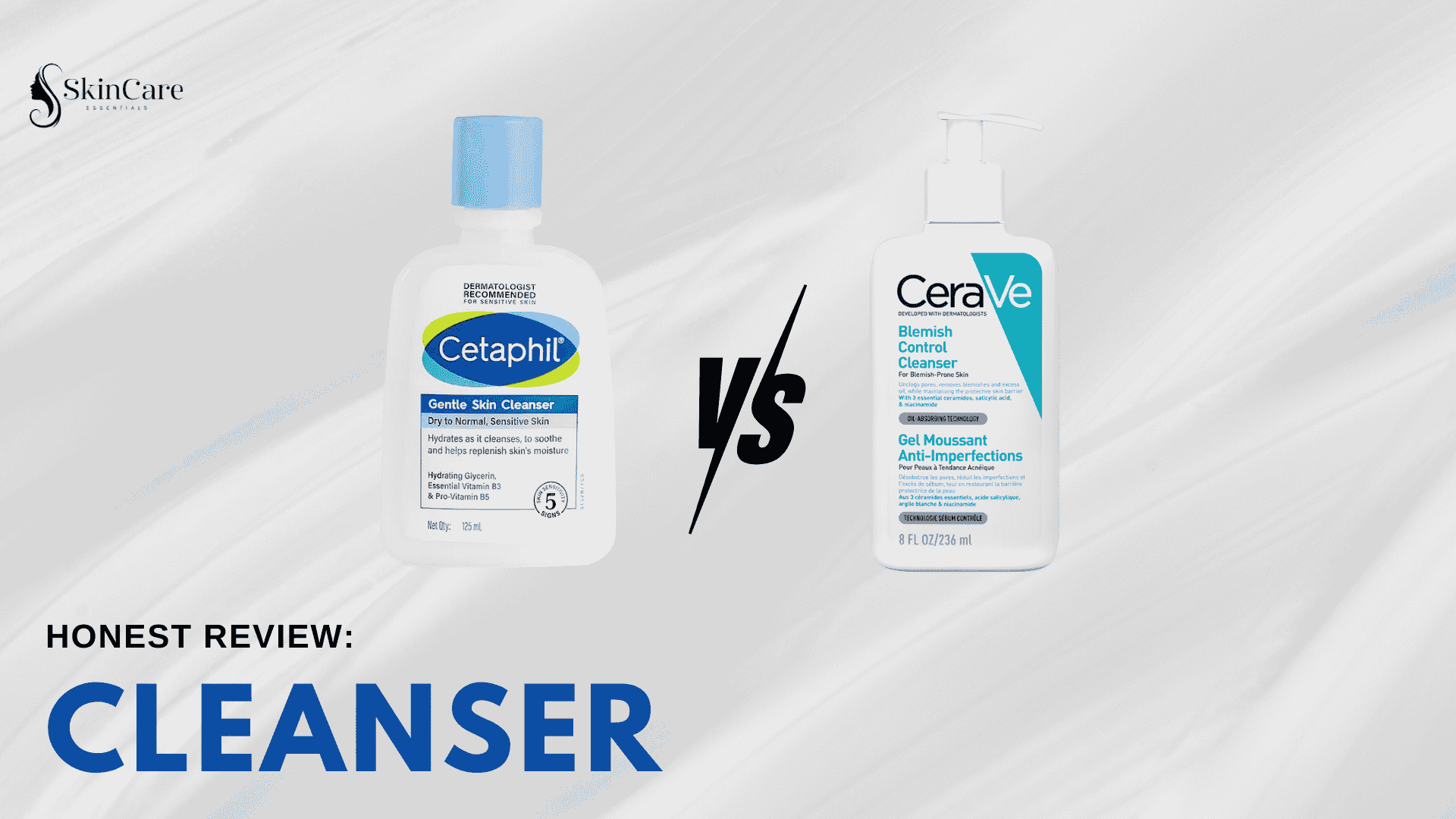
Throughout the day, your face accumulates bacteria and debris; without cleansing, these impurities clog pores and lead to breakouts or dullness. We are comparing the giants Cetaphil vs CeraVe as follows;
Cetaphil Cleanser:
Cetaphil has been a household name in skincare since 1947, known primarily for its less-is-more approach to cleansing. It is one of the most widely recommended brands by doctors for patients with skin conditions like eczema, rosacea, and psoriasis.
The modern formula uses micellar technology to act like a magnet, lifting dirt and oil while keeping the skin moisturized.
It’s famous gentle skin cleanser features a blend of niacinamide, panthenol, and hydrating glycerin. It is clinically proven to protect against the 5 signs of skin sensitivity: dryness, irritation, roughness, tightness, and a weakened skin barrier.
The classic version is a soap-free, non-foaming lotion that prevents the squeaky-clean feeling that often indicates stripped skin.
Unique to Cetaphil, the Gentle Cleanser can be used with water or applied and wiped off with a soft cloth if water isn’t available. The formula is designed to match the slightly acidic pH of human skin, helping maintain a healthy skin microbiome.
It is free from common irritants like fragrance and parabens, making it a safe choice for highly reactive or allergic skin types.
Every Cetaphil cleanser is tested to ensure it won’t clog pores, which is essential for those prone to whiteheads or blackheads. While it is a face Cleanser, it’s enough for the whole body for infants.
Those with very oily skin may find he classic formula leaves behind a slight residue or doesn’t feel powerful enough to cut through heavy sebum. Some users dislike the texture and feel that a non-foaming cleanser doesn’t feel as effective as a traditional soap.
Older versions of Cetaphil contained parabens and SLS, while newer formulas have improved; however, some clean beauty enthusiasts still find the synthetic ingredients off-putting.
CeraVe Cleanser:
CeraVe has skyrocketed in popularity, particularly becuse it treats the skin more like a medical concern than just a beauty step. The brand name itself is derived from ceramides, which are lipids that make up 50% of the skin barrier and help lock in moisture. CeraVe uses a patented Multivesicular emulsion delivery system that slowly releases hydrating ingredients over 24 hours.
Unlike cleansers that just clean, cerVe is specifically designed to restore the skin’s natural protective barrier while removing impurities.
Every product is formulated in collaboration with a dermatologist to ensure the ingredients are medically sound for various skin conditions. Most of their cleansers include hyaluronic acid. It’s a powerful humectant that can hold up to 1000 times its weight in water.
To help prevent irritation and contact dermatitis, CeraVe cleansers are formulated without added perfumes or scents. They offer specialized formulas such as the hydrating Cleanser for dry skin and the foaming facial Cleanser for oily skin. Many of their cleansers carry the NeA seal of acceptance, meaning they are safe for even the most compromised skin.
For acne-prone skin, ceraVe offers the Renewing SA Cleanser, which exfoliates dead skin cells with salicylic acid without being abrasive. Despite being packed with moisturizing lipids, the cleansers are designed to leave the skin without an oily film or a tingling sensation. They have disadvantages to consider: potential for initial tingling, formula consistency issues.
FAQ:
1. Why is CeraVe considered better than Cetaphil?
CeraVe is often preferred for its advanced formula. Every ceraVe product contains three essential ceramides and hyaluronic acid.
Ceramides: These help glue your skin cells together to keep the skin barrier strong
Technology: CeraVe uses MVE technology that slowly releases hydration throughout the day.
Bottom line: while Cetaphil is excellent at not irritating the skin, CeraVe actually helps repair it.
2. Which brand is better for oily skin?
For oily skin, CeraVe Foaming Facial Cleanser is the top choice. It contains, Niacinamide helps calm the skin and regulate oil production.
Foaming action: effectively removes excess sebum without leaving the skin feeling squeaky clean or stripped.
3. Why am I getting pimples while using Cetaphil?
Not cleaning deeply enough: The gentle Cleanser is so mild that it may not remove all the oil and dirt from oily skin, leaving pores clogged.
Cetaphil recently added niacinamide to its new formulas. While great for most people, some people’s skin reacts to niacinamide with small bumps or purging
4. Which one is the best makeup remover
Cerave is the best makeup remover. Because it contains a foaming facial cleansing formula. For the best results, use a double cleanse: use a cleansing balm or oil first, then follow up with your Cerave or Cetaphil Cleanser to remove the residue.
Conclusion:
Ultimately, the choice comes down to whether you want a minimalist, non-reactive wash or an ingredient-driven treatment that repairs as it cleanses.
Cetaphil remains the gold standard for those with hyperreactive or post-procedure skin, where even the most basic additives might cause a flare-up.
Cerave is the superior option for individuals dealing with a damaged moisture barrier, as its ceramide infusion helps rebuild the skin from the first step of a routine.
Both brands are equally accessible and affordable, making them excellent drugstore staples that prove you dont need to spend a fortune for quality skincare.
There is no wrong choice here; your skin’s unique reaction, whether it prefers Cetaphil simplicity or CeraVe nourishment, will be the ultimate guide for your daily ritual.